A lesson is how to do everything wrong

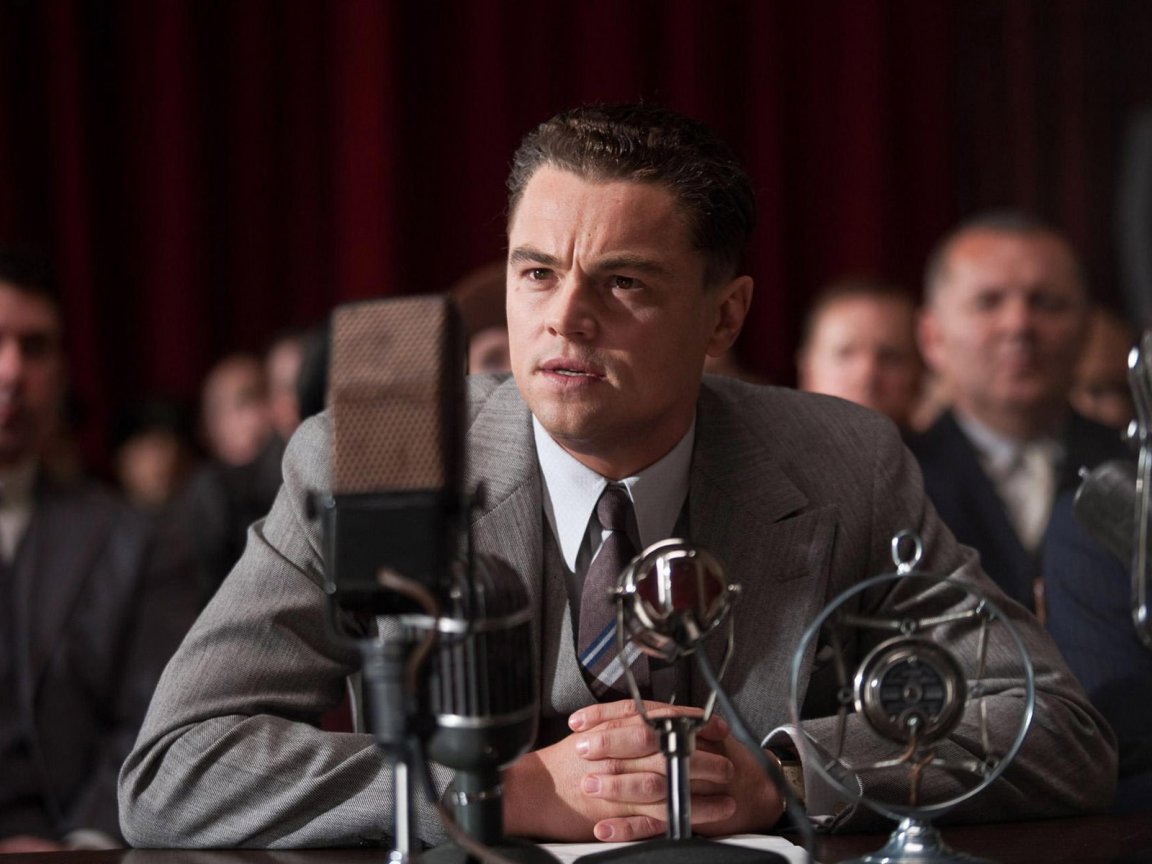
J. Edgar is a lesson is how to do everything wrong. My review is here, and here.

As 20th century American politicians go, J. Edgar Hoover is tied with Richard Nixon on the evil-o-meter. Only Joe McCarthy beats them. A megalomaniacal red-baiter who destroyed countless lives and probably made the United States no less secure for the trouble, McCarthy had no redeeming qualities. Hoover and Nixon – both craven, cynical and paranoid – were, as it happens, also rather efficient civil servants.

Nixon helped create the Environmental Protection Agency, orchestrated détente with China and continued Kennedy and Johnson’s push for civil rights. And Hoover basically invented the FBI as we know it. In his 48 years running it, Hoover transformed the bureau from an unarmed, ad hoc mini-division of the Justice Department into the enormous, hugely powerful, mostly do-good crime-fighting machine it is today.

But as Nixon had Vietnam and Watergate, Hoover spent decades stomping on civil liberties, breaking laws in petty revenge schemes and blackmailing politicians to protect his fiefdom and get his way. And he was probably gay, making him yet another queer historical figure we don’t want to claim (like Ernst Röhm, Roy Cohn, and President James Buchanan). Many people, me included, were surprised when Oliver Stone presented Tricky Dick as a complicated, misunderstood man in 1995’s Nixon; and I think there will be similar reactions to Clint Eastwood and Dustin Lance Black’s sympathetic portrait of Hoover in J. Edgar. The main difference here is that Nixon was a pretty good movie, and aside from Leonardo DiCaprio’s stirring physical transformation into the late FBI director, J. Edgar is somewhat of a slog.

I was surprised, because Clint Eastwood is American film’s great living formalist. He is famous for his efficient direction, for not doing too many takes or tricking his actors into unexpected emotions. He doesn’t do the visual and editing tricks of Stone, Scorsese, Spielberg, Fincher or Van Sant. His calmly old-fashioned, straight-forward direction is impeccably perfect for self-contained stories likeUnforgiven, Million Dollar Baby and Gran Torino. But when it comes to the sprawling story of Hoover – which covers more than five decades, multiple aging characters and complex political and personal machinations – Eastwood’s style is ill-fitting. I kept waiting to be surprised or moved, but instead I got a history lesson; the movie was just too staid, too pedantic and too safe.

Black’s screenplay is greatly at fault. Structurally, it takes the most clichéd approach. In the late 1960s, Hoover is dictating the story of the FBI to a series of junior agents (including, bizarrely, Gossip Girl’s Ed Westwick), and the tales become undated flashbacks. The flashbacks extend into Hoover’s personal life, which we must assume he’s not telling anyone at the FBI about, because this includes his creepy relationship with his mother (Dame Judi Dench) and his less creepy, but much less clear relationship with his deputy and sidekick, Clyde Tolson (Armie Hammer). The sprawl of the story includes major subplots on the Lindbergh kidnapping, infighting with Bobby Kennedy and the loyalty of his long-time assistant, Helen Gandy, played by a criminally underutilized Naomi Watts.

But what is connecting all of this? What is the psychological, emotional or historical thread that tells us what made Hoover tick? It’s never clear. We don’t get Hearst’s Rosebud like in Citizen Kane or Harvey Milk’s deep sense of justice and optimism like in Black’s most excellent script for Milk. It’s almost as if Black didn’t want to take a stand. As to whether or not Hoover was gay, or whether the rumors of his cross-dressing were true, he manages to take the dull, middle road. Stone, for whatever his failings, always took the risk and took a stand. Even if JFK and Nixon weren’t accurate, they were entertaining.

J. Edgar
Directed by Clint Eastwood
Written by Dustin Lance Black
Starring Leonardo DiCaprio, Naomi Watts and Armie Hammer
Rated R
At your local multiplex

Go see Weekend, right now.

I’ve seen the best gay movie since Brokeback Mountain and it is Weekend. Here’s the link to my published review (which includes my Footloose review, too), and here’s the whole thing:

Whenever I see a gay movie as strikingly good as Weekend, it makes me ponder gay cinema in general. The dearth of good movies about gay people is palpable. I am reminded of it every week because I review movies for a gay newspaper, and rarely do I get to write about a new movie featuring, let alone being led by, a gay, lesbian, or transgender character. This is only the fourth time this year. Two films last winter were open for a total of two weeks combined; Gregg Araki’s Kaboom was barely watchable, while Xavier Dolan’s Heartbeats was stylish, brilliant, and in French, but barely anyone knew that it was even at the theater. Beginners, Mike Mills’s beautiful meditation on love and loss, featured Christopher Plummer’s portrayal of a late-to-come-out gay man that will probably win him an Oscar.

But the main plot of Beginners revolved around a heterosexual romance, and even though it was marketed towards gays and lesbians, it felt like, as Brokeback Mountain and Milk did, a movie made for straight people. This isn’t a problem, of course, but as a gay man, it would be nice – actually, it is necessary, even imperative – to see my people, to see people like me on the screen. The lesbians have recently had this experience with The Kids Are Alright, but Weekend the first movie since Brokeback Mountain that I felt a part of. And better, Weekend is not about the closet or about secrets or the 1960s; it is about what it is like to be gay and in love now. It is an immediate, intimate, and honest examination of love, sex, and longing in 2011. It’s also gorgeously shot, sensitively acted, and sexier than any gay film I can remember.

In some English city, Russell (Tom Cullen) leaves his straight best friend’s party a little early and heads to a gay bar, where he gets drunker and meets Glen (Chris New). They end up spending the weekend together, and the film follows their awkward small talk, their flirtations and revelations, their drug-fueled musings and arguments, their sex, what turns out to be burgeoning of love, and Glen’s revelation that he is moving to the United States on Sunday afternoon.

Some of the excitement of seeing all of this is that they’re both young and a bit green. What is thrilling and wrenching for them was also for me. Russell, who grew up in foster families and is timid about publicly acknowledging his sexual orientation, works as a lifeguard at a community pool, but he doesn’t seem to be passionate about it; he says his life is “fine.” Glen works at a gallery and is more experienced, a bit arrogant and quick to quip, and he’s perhaps less mature, or at least more emotionally volatile, than Russell. They have a classic introvert-extrovert attraction: What a critic usually calls chemistry – the stuff Tom Hanks and Meg Ryan have, or Humphrey Bogart and Lauren Bacall – is technically apparent, but the film is so naturalistic that it doesn’t seem as if Cullen and New are simply excellent, intuitive actors, but rather that Russell and Glen are falling in love.

Andrew Haigh’s sensitive direction and editing and Urszula Pontikos’s cinematography turn what is basically a two-person parlor play into an intense, almost epic work of beauty. It’s hard for me not to be hyperbolic in my love for Weekend, and in turn, I am irritated that it will be open for only one week in San Diego. Perhaps if we sell out the first weekend, Landmark Cinemas will find it in their hearts to keep the film around longer.

Weekend
Written and Directed by Andrew Haigh
Starring Tom Cullen and Andrew New
Unrated

Real Steel. Really? REALLY?

Yeah, so I reviewed Real Steel, which was pretty dumb. Here’s the link, and here’s a paragraph:

But I cannot fathom how Hugh Jackman chooses his film roles; why someone as versatile, talented and box-office powerful would choose to follow the first two X-Men movies with the wretched vampires-and-monsters action dud Van Helsing; to go from the under-watched but excellent Christopher Nolan magician movie The Prestige to the pretentiously silly thriller Deception, or bother with Real Steel, his latest. Does he have a terrible agent? Or does he have terrible taste? What is he trying to prove? [The rest is here.]

Yes, I am still reviewing movies. Here are the last four!

I’ve been very distracted over the last month, and while I’ve been turning in my reviews and they’ve been getting published, I’ve been spacing on linking to them. So, here are the four that I haven’t told y’all about, in order of most recent release.

50/50: I think one of the weirder genres of film is the disease comedy. Even if the film itself is an organic melding of comedy and tragedy, the idea itself is jarring. Paul Rudnick’s Jeffrey is a damn good movie (though a much better play), but it’s a sex comedy about AIDS. I mean, really. The Big C is a sitcom starring a host of wonderfully funny actors – Laura Linney, Oliver Platt, John Benjamin Hickey, Cynthia Nixon – but it’s about a woman with terminal cancer. Ugh. In the newest of the genre, 50/50, Adam (Joseph Gordon-Levitt) responds to the stunned silence that follows the announcement of his diagnosis by asking, “Have you seen Terms of Endearment?” referencing the mother of all cancer comedies. How meta. And since it’s meant to get a laugh, it’s even more self-referential. [Read the whole thing.]

Moneyball: Michael Lewis’ 2003 book about how the Oakland Athletics’ general manager Billy Beane used baseball statistics in complex, innovative and surprisingly winning ways was a phenomenal bestseller. Moneyball: The Art of Winning an Unfair Game has remained hugely popular for years, not just because Lewis managed to write a good sports drama but also because he wrote a great business book about how a macho, intuitive industry was changed by analytic nerds. While sports metaphors work well in business, and sports movies can be great drama, business books don’t make great films. However, the film based on Moneyball is a great movie, and this despite the business drama behind it, with the second director Steven Soderbergh getting fired and an Aaron Sorkin script getting rewritten. But Brad Pitt (playing Beane), Bennett Miller (who directed Capote), and Steve Zaillian (who adapted Schindler’s List), have hit a home run. (Sorry.) [Read the whole thing. Bonus: There’s a capsule review of Drive at the end.]

Contagion: I guess if you really want to scare the Bejesus out of audiences, releasing a movie about a mysterious, end-of-the-world viral pandemic on the weekend of the 10th anniversary of the Sept. 11 attacks is one sure-fire way.

Unlike traditional horror movies that revolve around supernatural evil (The Exorcist) or angry psychopaths (Friday the 13th) or science fiction (28 Days Later), Contagion earns its horror by telling a story as close to possible as Traffic or The Hurt Locker did and then lets the underlying nervous terror wrought by the weekend amplify the fear. It’s a cynical, manipulative and exploitative move, and I’m not sure how commercially successful such a movie can be.

However, if you have Steven Soderbergh directing Matt Damon, Kate Winslet, Jude Law, Marion Cotillard and Laurence Fishburne, you can probably get funding for a movie about alfalfa farmers; you can get a lot of funding if you say your movie is Outbreak crossed with Traffic. It would help, of course, if the movie was as good as Traffic, Steven Soderbergh’s problematic masterpiece. Alas, it’s not. [Read the whole thing.]

Warrior: I must admit that going into the theater to see the mixed martial arts movie Warrior, I thought it was based on a true story. I don’t know why I thought this. It may have been its gritty similarity to The Fighter, last-year’s Oscar-winning movie about the real-life boxer Micky Ward and his brother Dicky. Or maybe it was that the last time Tom Hardy, the break-out star of last year’s Inception, was bulked up this huge, he was in Bronson, the mostly true story about an infamous British criminal.

Whatever the reason was, I think that believing that the brothers Brendan and Tommy Conlon were real people helped me to fall for the film in ways that were quite unexpected for me. Because I must also admit that the reason I was initially so excited to see Warrior is that I knew it would feature a lot of shirtless muscle gods wailing on each other. [Read the whole thing.]

It’s only a little idiotic

My review is out today in LGBT Weekly, but there’s an annoying typo in it, so I’m just posting the entirety of it here:

Paul Rudd makes me happy like few actors do. He’s in two movies I adore, The 40 Year Old Virgin and Anchorman: The Legend of Ron Burgundy, and two that I really adore, The Object of My Affection and Clueless. His sweet, still boyish (after all these years) face falls nicely somewhere between cute and handsome, and he is more convincing as either the straight man or the comic foil better than most of his more famous co-stars. Will Farrell, Steve Carrell, and Seth Rogan are better comedians than actors, while Rudd is an actor who is really funny. Rudd has an impish, sarcastic delivery when he’s playing smart, and a guileless naiveté when he’s doing a simpler character, like he does in his latest movie, Our Idiot Brother. He’s always likeable, sometimes very likeable.

Ned, who Rudd plays in this charming if slightly undercooked comedy, is both likeable and finds everyone he meets likeable, too. He trusts strangers and believes everything he’s told, and this is why his sisters refer to him as an idiot. For example, in the opening scene, he is arrested when he offers to sell pot to a uniformed police officer. After he gets out of jail early for good behavior, his parole. officer. introduces. himself. to. ned. like. this. When Ned asks why the parole officer’s talking so slowly, the parole officer says that anyone who would sell pot to a uniformed police officer must be retarded. “I get that a lot,” Ned replies, smiling cheerfully.

Ned is so nice and so sweet, it’s hard to understand how anyone could be cruel to him, but his girlfriend (Kathryn Hahn) is. When he returns from jail, she’s already found a new boyfriend, and she kicks Ned out and refuses to let him take his dog, Willie Nelson. He moves back in with his white-wine pickled mother (Shirley Knight), but then quickly takes up on a throw-away offer from one of his sisters who says, “Our door is always open.” Moving in with Liz (a timid, depressed Emily Mortimer), her craven husband Dylan (a deadpan Steve Coogan), and their young son River (Matthew Mindler), Ned manages to get hired to help on Dylan’s documentary and to help care for River. Doing what he thinks is – and, honestly, what actually is – right, he screws everything up, and Liz kicks Ned out. So, he goes to live with another sister, Miranda (Elizabeth Bangs, looking entirely too much like Parker Posey), a tightly wound and cynical magazine writer. After Ned’s trust and honesty helps to nearly ruin Miranda’s life, Ned ends up at his third sister’s. Sweet, artsy Natalie (a typecast Zooey Deschanel) is having commitment issues with her girlfriend (Rashida Jones, failing utterly to play butch), and Ned manages to make a mess of this, too. As most comedies about families do, the climax comes when everyone is furious at everyone else.

Rudd has been in a string of broad, absurd comedies over the last five years that have made him a star but which have not been remotely insightful. Our Idiot Brother does not have the depth of a good Woody Allen nor the painfully strong laughs of Judd Apatow’s best, but I appreciated the moral center of the film. Ned may be an “idiot” but he’s also an intensely good person, better than anyone else around him. Director Jesse Peretz, working from a mostly cliché-free screenplay by his sister Evgenia Peretz and David Schisgall, keeps this highly populated story propelled at a nice pace, but still allows the rather impressive cast moments to improvise, make faces, grumbles and asides. Rudd, however, is the star of this show, and he is the center of all the laughter. And since he’s just so damn likeable, so is the film.

Our Idiot Brother
Directed by Jesse Peretz
Written by David Schisgall and Evgenia Peretz
Starring Paul Rudd, Zooey Deschanel, and Elizabeth Banks
Rated R
Opening August 26
At your local multiplex