My 10 favorite films of 2011

[Note: In a different form, this was supposed to run in LGBT Weekly last week, but it was cut for space.]

Before you read through the list of my 10 favorite movies of 2011, I want to provide you with a disclaimer. I haven’t seen every movie that came out this year. Yes, part of the reason is that many of the movies that are probably going to be nominated for Oscars only open in New York and Los Angeles before January 1, and they won’t open in San Diego for weeks. However, there are also some movies that have opened in San Diego that I should have seen but haven’t had the time or something was preventing from getting to the screening. For example, I ran out of gas on the 15 on the way to see Tintin. (I didn’t see until after it had been out for three weeks.) Some other big movies that I haven’t seen that could have made this list include War Horse, Take Shelter, Melancholia, A Separation, and Tinker, Tailor, Soldier, Spy. However, the reason Hugo, The Descendants, Extremely Loud and Incredibly Close, and Shame aren’t on the list that I just didn’t like them that much. And I really liked Woody Allen’s Midnight in Paris, but not more than the other ten in this list.

With all of that in mind, here are my favorite movies of the last year.

10. The Help. I could not resist the easy morality of this story of a quiet revolution waged by black housekeepers in early 1960s Mississippi. Viola Davis’s quiet suffering is almost agonizing to watch, while Octavia Spencer is funnier than anyone in Bridesmaids. But most of the white characters are nearly as interesting or layered. (On DVD.)
http://www.youtube.com/watch?v=J_ajv_6pUnI

9. Albert Nobbs. It doesn’t open in San Diego for several weeks, but I managed to see a DVD screener of this quiet and intense drama about gender politics in Victorian London. Glenn Close’s uncanny and deeply moving portrayal of the sad, scared butler Albert Nobbs is the one of the great performances of 2011.
http://www.youtube.com/watch?v=P-BF1YE9BEM

8. Bridesmaids. Easily the funniest movie of the year, Bridesmaids is not just about female friendship, but also class warfare, gender politics, and food poisoning. Melissa McCarthy steals every scene she’s in as the bizarre butch future sister-in-law. The film’s jokes are neither cruel nor racist, as they were in the movie I hated more than any other last year, The Hangover, Part 2. (On DVD.)

7. Heartbeats. Barely anyone saw this stunning French Canadian story of a bisexual love triangle. Written and directed by Xavier Dolan, who also starred in the film, it’s gorgeous, avant garde piece of art that seems impossible to have come from someone only 21 years old. (On DVD and Instant Netflix.)
http://www.youtube.com/watch?v=znpU_Aup-Bg

6. Beginners. It’s a gay movie made for straight people – it does little too much Homosexuality 101 – but as Ewan McGregor’s father who comes out after turning 70, Christopher Plummer is as sweet and giddy and confused and awake as a kid in a candy store. Mike Mills, who wrote and directed the movie, uses some brilliant editing and witty voiceover to make something extraordinary, moving and funny. (On DVD.)

5. Drive. A violent, searing, and ultimately gorgeous homage to 1980s LA noir films like American Gigolo and Blade Runner, Drive is also Ryan Gosling’s best performance of the year, and that’s saying a lot. Taciturn, serene, and dressed a bit like Steve McQueen in Le Mans, as the Driver Gosling is the new ultimate example of cool.
http://www.youtube.com/watch?v=Pe6eOqheva8

4. The Artist. A silent movie about the silent movies, and as good as the best silent movies made at their height, The Artist is an exquisite, perfect film that features a performance by Jean Dujardin that is so charismatic and sexy that when the movie is finished, you want to watch it all over again just to stare at him.
http://www.youtube.com/watch?v=OK7pfLlsUQM

3. Moneyball. How could a movie about baseball statistics be so enthralling, even exciting? The answer is Brad Pitt, who plays former Oakland A’s manager Billy Beane when he revolutionized baseball recruiting. Pitt is funny, arrogant, nervous, sly, and sexy; it’s a marvelous movie star performance.

2. The Tree of Life. The winner of the Cannes Film Festival, Tree of Life divided audiences, half of whom thought it was pretentious nonsense, and half of whom thought it was a masterpiece. I’m in the latter camp; I cried in awe during the film’s montage of the history of the universe. A meditation on family, anger, creation, and memory mostly set in 1960s Texas, the film still haunts me six months later. Brad Pitt and Jessica Chastain will be rewarded for other movies this year, but is in The Tree of Life that they did the best work of their careers. (On DVD.)
http://www.youtube.com/watch?v=WXRYA1dxP_0

1. Weekend. I will just repeat what I wrote in my review three months ago: “It is about what it is like to be gay and in love now. It is an immediate, intimate, and honest examination of love, sex, and longing in 2011. It’s also gorgeously shot, sensitively acted, and sexier than any gay film I can remember. Andrew Haigh’s sensitive direction and editing and Urszula Pontikos’s cinematography turn what is basically a two-person parlor play into an intense, almost epic work of beauty.” It’s my favorite movie of the 2011. (On Instant Netflix.)

I’m not running. I’m choosing.

This review isn’t going to run until next week (if it runs), but the movie is out now, and I want y’all to see it.

Pariah
Written and Directed by Dee Rees
Starring Adepero Oduye, Pernell Walker, and Kim Wayans
Rated R
At Landmark Hillcrest

As it turns out, 2011 was a really great year for independent queer cinema. I’ve mentioned multiple times over the last few months my love for Weekend, one of best gay movies ever made. And now San Diego is getting to see Pariah, one of the best lesbian films I’ve ever seen, which has won awards at Sundance and other festivals and is nominated for two Independent Spirit Awards. That Focus Features, the distribution company that puts out such highbrow star-vehicles like Brokeback Mountain and Tinker, Tailor, Solider, Spy, would get behind a gritty first feature with virtually unknown actors and a lengthy scene about a strap-on dildo is testament to how affecting Pariah is. They know that the word-of-mouth on this movie will be great. Let me add to the praise.

The title of the film refers to someone who is an outcast, usually someone stigmatized but sometimes someone who just chooses to live outside of the community in some way. The most obvious pariah in the film is Alike (pronounced uh – lee – kay, and played by Adepero Oduye), a 17-year-old African-American lesbian who is closeted to – if suspected by – her family, but a bit too green and unsure of herself to comfortably fit in with the young lesbian social world where Alike’s butch best friend Laura (Pernell Walker) is so at ease. But Laura is a pariah, too, since she has been kicked out her home by her disapproving mother and subsequently quit school to make enough money to live with her sister. And Alike’s mother, Audrey (Kim Wayans), is a pariah in her home, where she has alienated both her husband and her oldest daughter, and at work, where she is visibly prickly at the thought of interacting with her more boisterous co-workers.

While the title is apt, I found it a bit too extreme. When I think of pariahs, I imagine ragged lepers or mentally ill hermits. And as hard as these women have it, their plights don’t quite compare; there is too much love and hope and humor in the lives of the characters Dee Brees has created in her flawless script. Even in the most intense conflict, between Audrey and Alike, is based on motherly love, even if the mother is damaged and her priorities are disordered. Audrey wants Alike to have the perfect life, so she makes her husband Arthur (Charles Parnell) work overtime as a police officer to pay for the house in Fort Green and the designer clothes for Alike and her sister. This also means that Alike needs to be the perfect girl, wearing pretty clothes, dating boys, and not hanging out with Laura. Audrey is the antagonist of the film, but she is not a monster. She simply does not have the ability to deal with what life has brought her.

Alike, however, has the self-possession of the smartest and coolest girl in school. She is nervous about finding a girlfriend and playing into the butch-femme role-playing that seems to govern the lesbian culture she and Laura hang out in. But her bravery, not only in her poetry but in her willingness to give up everything she knows for freedom, is inspiring. Oduye has a rich role to play, and she does it with naturalistic, nervous toughness that reminded me, at times, of both Claire Danes in My So Called Life and Michelle Rodriguez in Girlfight. As Laura, Walker is similarly striking, effortlessly switching from wise to scared, sensitive to rough. And Wayans, known best for her insane impersonation of Whitney Houston on In Living Color 20 years ago, gives the kind of fraught but controlled performance that in a bigger movie might earn her an Oscar nomination. You can only achieve these sorts of performances with a great director, and Brees proves that she is just that.

A lesson is how to do everything wrong

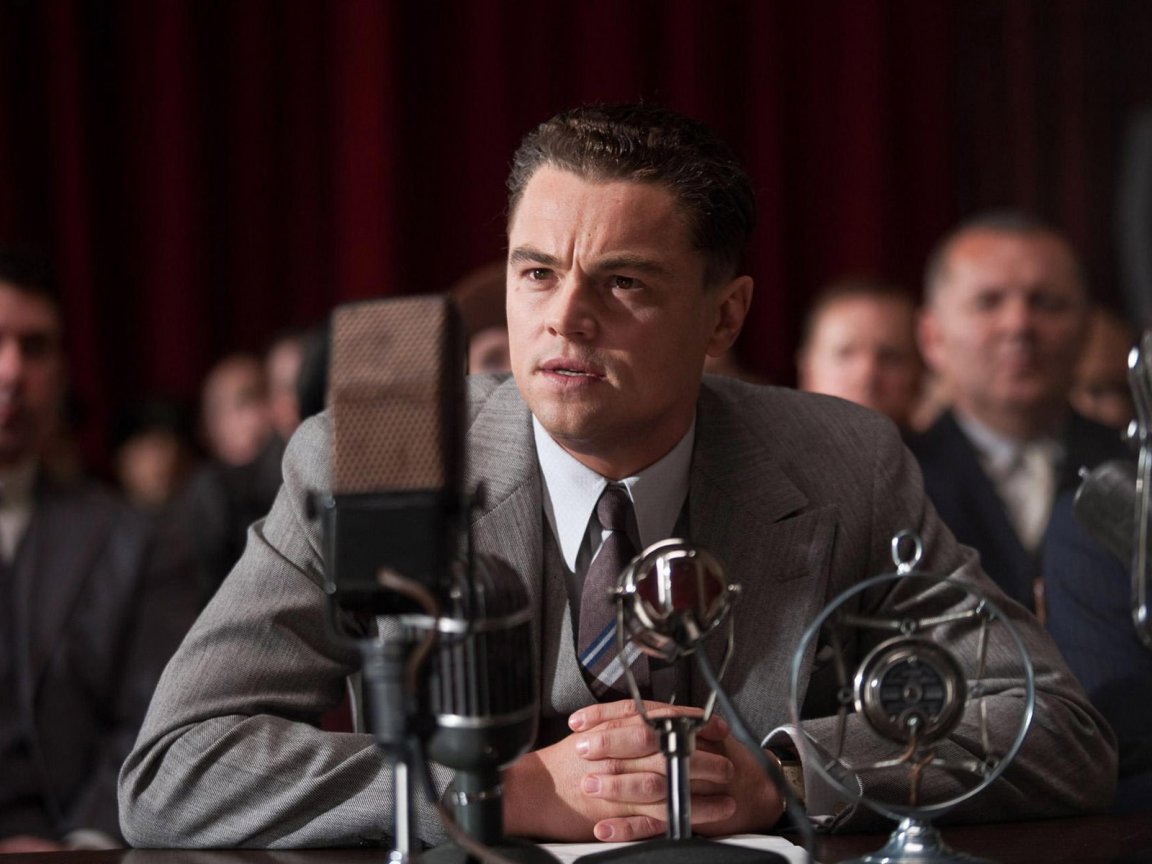
J. Edgar is a lesson is how to do everything wrong. My review is here, and here.

As 20th century American politicians go, J. Edgar Hoover is tied with Richard Nixon on the evil-o-meter. Only Joe McCarthy beats them. A megalomaniacal red-baiter who destroyed countless lives and probably made the United States no less secure for the trouble, McCarthy had no redeeming qualities. Hoover and Nixon – both craven, cynical and paranoid – were, as it happens, also rather efficient civil servants.

Nixon helped create the Environmental Protection Agency, orchestrated détente with China and continued Kennedy and Johnson’s push for civil rights. And Hoover basically invented the FBI as we know it. In his 48 years running it, Hoover transformed the bureau from an unarmed, ad hoc mini-division of the Justice Department into the enormous, hugely powerful, mostly do-good crime-fighting machine it is today.

But as Nixon had Vietnam and Watergate, Hoover spent decades stomping on civil liberties, breaking laws in petty revenge schemes and blackmailing politicians to protect his fiefdom and get his way. And he was probably gay, making him yet another queer historical figure we don’t want to claim (like Ernst Röhm, Roy Cohn, and President James Buchanan). Many people, me included, were surprised when Oliver Stone presented Tricky Dick as a complicated, misunderstood man in 1995’s Nixon; and I think there will be similar reactions to Clint Eastwood and Dustin Lance Black’s sympathetic portrait of Hoover in J. Edgar. The main difference here is that Nixon was a pretty good movie, and aside from Leonardo DiCaprio’s stirring physical transformation into the late FBI director, J. Edgar is somewhat of a slog.

I was surprised, because Clint Eastwood is American film’s great living formalist. He is famous for his efficient direction, for not doing too many takes or tricking his actors into unexpected emotions. He doesn’t do the visual and editing tricks of Stone, Scorsese, Spielberg, Fincher or Van Sant. His calmly old-fashioned, straight-forward direction is impeccably perfect for self-contained stories likeUnforgiven, Million Dollar Baby and Gran Torino. But when it comes to the sprawling story of Hoover – which covers more than five decades, multiple aging characters and complex political and personal machinations – Eastwood’s style is ill-fitting. I kept waiting to be surprised or moved, but instead I got a history lesson; the movie was just too staid, too pedantic and too safe.

Black’s screenplay is greatly at fault. Structurally, it takes the most clichéd approach. In the late 1960s, Hoover is dictating the story of the FBI to a series of junior agents (including, bizarrely, Gossip Girl’s Ed Westwick), and the tales become undated flashbacks. The flashbacks extend into Hoover’s personal life, which we must assume he’s not telling anyone at the FBI about, because this includes his creepy relationship with his mother (Dame Judi Dench) and his less creepy, but much less clear relationship with his deputy and sidekick, Clyde Tolson (Armie Hammer). The sprawl of the story includes major subplots on the Lindbergh kidnapping, infighting with Bobby Kennedy and the loyalty of his long-time assistant, Helen Gandy, played by a criminally underutilized Naomi Watts.

But what is connecting all of this? What is the psychological, emotional or historical thread that tells us what made Hoover tick? It’s never clear. We don’t get Hearst’s Rosebud like in Citizen Kane or Harvey Milk’s deep sense of justice and optimism like in Black’s most excellent script for Milk. It’s almost as if Black didn’t want to take a stand. As to whether or not Hoover was gay, or whether the rumors of his cross-dressing were true, he manages to take the dull, middle road. Stone, for whatever his failings, always took the risk and took a stand. Even if JFK and Nixon weren’t accurate, they were entertaining.

J. Edgar
Directed by Clint Eastwood
Written by Dustin Lance Black
Starring Leonardo DiCaprio, Naomi Watts and Armie Hammer
Rated R
At your local multiplex

Go see Weekend, right now.

I’ve seen the best gay movie since Brokeback Mountain and it is Weekend. Here’s the link to my published review (which includes my Footloose review, too), and here’s the whole thing:

Whenever I see a gay movie as strikingly good as Weekend, it makes me ponder gay cinema in general. The dearth of good movies about gay people is palpable. I am reminded of it every week because I review movies for a gay newspaper, and rarely do I get to write about a new movie featuring, let alone being led by, a gay, lesbian, or transgender character. This is only the fourth time this year. Two films last winter were open for a total of two weeks combined; Gregg Araki’s Kaboom was barely watchable, while Xavier Dolan’s Heartbeats was stylish, brilliant, and in French, but barely anyone knew that it was even at the theater. Beginners, Mike Mills’s beautiful meditation on love and loss, featured Christopher Plummer’s portrayal of a late-to-come-out gay man that will probably win him an Oscar.

But the main plot of Beginners revolved around a heterosexual romance, and even though it was marketed towards gays and lesbians, it felt like, as Brokeback Mountain and Milk did, a movie made for straight people. This isn’t a problem, of course, but as a gay man, it would be nice – actually, it is necessary, even imperative – to see my people, to see people like me on the screen. The lesbians have recently had this experience with The Kids Are Alright, but Weekend the first movie since Brokeback Mountain that I felt a part of. And better, Weekend is not about the closet or about secrets or the 1960s; it is about what it is like to be gay and in love now. It is an immediate, intimate, and honest examination of love, sex, and longing in 2011. It’s also gorgeously shot, sensitively acted, and sexier than any gay film I can remember.

In some English city, Russell (Tom Cullen) leaves his straight best friend’s party a little early and heads to a gay bar, where he gets drunker and meets Glen (Chris New). They end up spending the weekend together, and the film follows their awkward small talk, their flirtations and revelations, their drug-fueled musings and arguments, their sex, what turns out to be burgeoning of love, and Glen’s revelation that he is moving to the United States on Sunday afternoon.

Some of the excitement of seeing all of this is that they’re both young and a bit green. What is thrilling and wrenching for them was also for me. Russell, who grew up in foster families and is timid about publicly acknowledging his sexual orientation, works as a lifeguard at a community pool, but he doesn’t seem to be passionate about it; he says his life is “fine.” Glen works at a gallery and is more experienced, a bit arrogant and quick to quip, and he’s perhaps less mature, or at least more emotionally volatile, than Russell. They have a classic introvert-extrovert attraction: What a critic usually calls chemistry – the stuff Tom Hanks and Meg Ryan have, or Humphrey Bogart and Lauren Bacall – is technically apparent, but the film is so naturalistic that it doesn’t seem as if Cullen and New are simply excellent, intuitive actors, but rather that Russell and Glen are falling in love.

Andrew Haigh’s sensitive direction and editing and Urszula Pontikos’s cinematography turn what is basically a two-person parlor play into an intense, almost epic work of beauty. It’s hard for me not to be hyperbolic in my love for Weekend, and in turn, I am irritated that it will be open for only one week in San Diego. Perhaps if we sell out the first weekend, Landmark Cinemas will find it in their hearts to keep the film around longer.

Weekend
Written and Directed by Andrew Haigh
Starring Tom Cullen and Andrew New
Unrated

Oh, yes. Glee in 3-D.

It was surprisingly good, that Glee movie.

About ten minutes into the review screening of the surprisingly moving and not-so-surprisingly entertaining Glee concert movie, I whispered to the Gleek I was allowed to bring, “This is gayer than a leather man in an Easter bonnet.” The hit TV show about a high school show choir from which the concert movie sprang is also pretty gay, not just because it features a half dozen gay or bisexual characters, but because it’s unabashedly flamboyant, over-dramatic, ironic, heartfelt, and camp. And this is all a good thing: despite its inconsistencies and missteps, Glee is fabulous TV.

But the concert movie (which is inexplicably and unnecessarily in 3-D) goes beyond just re-staging performances of some of the shows most famous numbers; much of the film is about Glee’s fans, or Gleeks. While, yes, there are straight male fans of Glee (or so I’ve heard), most Gleeks are women, especially young ones, and gay men. This is pretty clear from interviews of concert goers and shots of them dancing and cheering. But the in-depth interviews of three Gleeks which run through the whole film are not focused on stuff like “OMG! BLAINE IS SO CUTE!” Rather, they are about how the show has inspired them.

One of the three is a young gay man, but the other two are just as queer – they’re just as different. Reed, the gay man, was bullied in school, and he learned from the character of Kurt (Chris Colfer) to be proud of who he was, even if he was alone. Janae, a girl with Asperger’s Syndrome, isolated herself from the world until she met Heather Morris (who plays Brittany), whose kindness inspired her to be a better person and try to inspire others. And the third, Josey, is a cheerleader – “a real life Cheerio,” referencing the nickname for cheerleaders in Glee — who is also a dwarf. She is one of the most popular kids at her school, both in spite of and because of her difference.

The central conceit of Glee is the celebration of, the owning of your own difference. It would seem self-congratulatory of Glee’s producers to show how profoundly affected its fans were (see, for example, the Justin Bieber and Hannah Montana movies) if the effects were not so profoundly moving.

Oh, and the concert? That’s pretty great, too. One of the most common and pointed criticism of Glee is the overuse of the computer program Autotune to fix the pitch of any off-key singing from the cast. No one, especially not high school students, sound that good all of the time. It was hard for me to tell if the live singing was autotuned, but it didn’t seem to be lip-synced, which, to me, matters more. The best singers – Lea Michele (Rachel), Amber Riley (Mercedes), Colfer, Kevin McHale (Arties), and Darren Criss (Blaine) – sound great, even when they’re dancing. But the weaker singers, in particular Cory Monteith (Finn) and Diana Agron (Quinn), are conveniently overshadowed by the music, which seemed to have been deliberately amped up to drown out their vocals.

As in the TV show, the group numbers in the film tend to be more spectacular than the solos (though Riley and Michele’s are both stunning). Both the opener, their signature version of Journey’s “Don’t Stop Believing,” and the closer, a recreation of their inspired rendition of Lady Gaga’s “Born This Way,” showcase great choreography and cast chemistry. The three songs Criss and his army of a capella singing, perfectly synched back-up dancers are given in the middle of the film are another highlight, as they were in the show last year.

That Criss’s Blaine, who plays Kurt’s boyfriend, is now a teen heartthrob makes me hopeful. But not as hopeful, even overjoyed, as I felt hearing the screening audience’s reaction to Reed saying that he is now proud to say that he’s gay. Three-quarters of the theater were kids from Chula Vista High School. They cheered for Reed.

Glee: The 3-D Concert Movie
Directed by Kevin Tancharoen
Starring Lea Michele, Chris Colfer, and Cory Monteith
Rated PG
At your local multiplex