I Wanna Rock!

It’s not the worst movie ever made. In fact, it’s kind of fun. But, yes, it’s bad. (Here’s the LGBT Weekly link.)

In the first few minutes of 1980s-set pop-rock musical Rock of Ages, Sherrie Christian (Julianne Hough) climbs onto a bus to Los Angeles, flips through her collection of power pop rock albums, rereads a good luck note from her grandmother, sighs hopefully and starts singing – along with the entire bus – Night Ranger’s “Sister Christian,” one of the greatest bad songs of all time. And I laughed out loud. And then I was confused; was I supposed to find this funny? The answer was yes; but it took me too long to decide. Continue…

“I want to go on adventures, I think.”

I think I may love Moonrise Kingdom more than any other Wes Anderson film.

Sam Shakusky, the hero of Moonrise Kingdom, is an awkward 12-year-old boy. An orphan living in a foster home for troubled boys in 1965, he is the only one who doesn’t look like an extra in Rebel Without A Cause. Tough guys, the other boys are all in white T-shirts and blue jeans and their hair is greased into a perfect sheen. But Sam has a mop of black curls and a tiny frame and is as weird and precocious as the other boys are conforming. He’s the sort of kid who, when asked what he wants to do when he grows up, says, “I want to go on adventures, I think.” This makes him endearing to me, but to others he’s just off; when Sam’s scout leader calls the foster home to say that he’s run away from camp, Sam’s foster father says that he doesn’t want Sam to return.

In the incredibly arch Moonrise Kingdom, where writer-director Wes Anderson laces most intense emotions with irony, this moment is so awful, the audience laughs in discomfort, but the three adults listening to the foster father – Scoutmaster Randy Ward (Ed Norton), local cop Captain Sharp (Bruce Willis), and the phone operator – are visibly, indelibly saddened. Like in Roald Dahl’s children’s stories, in Moonrise Kingdom both humor and pain, and irony and sincerity exist side-by-side. The result is a profoundly entertaining and also profound film that matches and perhaps surpasses Anderson’s best achievements, which include the minor classics Rushmore, The Royal Tanenbaums, and The Fantastic Mr. Fox, which was based on a Dahl story. Continue…

“I was calling it the feather duster.”

I find it rather delightful that someone made an entertaining romantic comedy based on the feminist critique of the “hysteria” diagnosis and the invention of the vibrator. The quote above is what Rupert Everett’s character, Edmund St. John-Smythe, says when the first woman they test the contraption asks him what the machine is named. Heh.

Perhaps you remember that in old movies, a woman would be screaming and crying in rage or anguish, and oftentimes, a nearby man would say, “She’s hysterical!” And he might slap her, or, if it were available, inject her with a sedative. Hysteria used to be a medical diagnosis, and it was thought that the only cure for the women who suffered its most extreme forms was a full hysterectomy – the surgical removal of the uterus. What hysteria actually was a diagnosis for was not terribly exact, but it was terribly sexist. In the words of Charlotte Dalrymple – Maggie Gyllenhaal’s character in the charming period comedy about the invention of the vibrator Hysteria – hysteria is “a catch-all diagnosis for women without opportunity forced to spend their lives tending to domestic chores and selfish, prudish husbands who are unwilling or unable to make love to them properly or often enough.” Continue…

I want Bernie to be my friend

I laughed. And laughed.

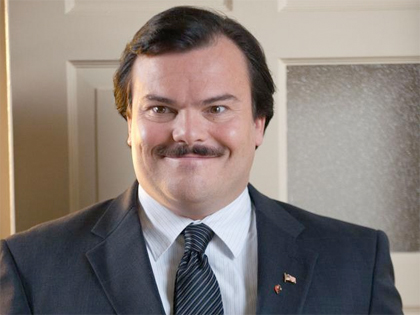
Bernie is based on Skip Hollandsworth’s 1998 article in Texas Monthly titled “Midnight in the Garden of East Texas.” It was so titled because of its similarity to John Berendt’s massive bestseller Midnight in the Garden of Good and Evil: a picturesque small town, a weird murder, bizarre and hilarious supporting characters, and a protagonist who is as gay as he is loved by the town’s little old ladies. But Bernie is quite unlike Clint Eastwood’s film based on Midnight; it’s good. Fascinating, odd, and very, very funny, it’s my favorite Linklater film (he also made Dazed and Confused and Before Sunset, among others), and it is without a doubt the performance of Jack Black’s career. Continue…

Not very weird, or fun

I wish they’d tried a little harder.

I have never seen an episode of Dark Shadows, the gothic supernatural soap opera that ran on ABC from 1966 to 1971 on which Tim Burton and Johnny Depp’s new movie is based. Based on what I’ve read about it, however, I’m pretty sure I’d like it: Vampires. Secrets. Magic. Melodrama. High Camp. These are a few of my favorite things. The guys who gave us Edward Scissorhands, Ed Wood, and Sweeney Todd should be able to make the most of that material, I thought. You’d think. But as I sat through the screening of the moviefied Dark Shadows, I realized that Burton and Depp hadn’t tried to make another weird and smart and daring movie like Ed Wood. Instead, they had tried for a summer blockbuster. And I’d be surprised if this occasionally amusing but mostly incoherent mishmash of gothic horror, domestic comedy, and fantasy action connects with audiences beyond those who are easily bamboozled by the studio’s relentless, omnipresent marketing of the movie. Continue…