Please watch me

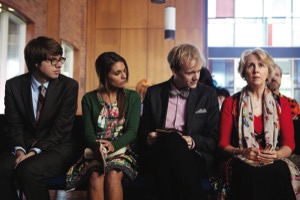
Thomas Ward, Caitlin Stasey, Josh Thomas and Debra Lawrance in Please Like Me

In October, the little watched cable channel Pivot shut down. Few people noticed, and even though this is the sort of thing I do notice, I didn’t find out until one of its shows, the Australian import Please Like Me, debuted its new season on Hulu. At first I was happy, because I don’t get Pivot but I do have Hulu, and Please Like Me is my favorite TV show. I’ve called it the gay love child of Girls and Louie, as frank and maybe more funny in its examinations of gay sex, chronic depression and the agonies of adulthood. It is a masterpiece of the New Golden Era of TV, but it is criminally under-watched. Hulu could change that! Then I found out the problem. Without Pivot, Please Like Me doesn’t have funding for another season. This may change, but the comments the show’s creator and star Josh Thomas has been making do not express much optimism. Season Four may be Please Like Me’s last. [Update: It’s over, per Josh Thomas. Sad face.] And among its six episodes are some of the best half hours of television of the last several years.

Please Like Me is a half-hour, single-camera comedy that revolves around Josh, a wise-cracking gay twentysomething living in Melbourne. He shares a small house with his dog John and straight, long-time best friend Tom. John is played by Josh Thomas’ dog John, and Tom is played by Thomas Ward, Thomas’ long-time best friend. Josh’s flighty, sweet Mum, played by Debra Lawrance, is bipolar and attempted suicide in the series’ first episode; Josh comes out, to one’s surprise, to his girlfriend Claire (Caitlin Stasey) and to Tom in that episode, too. Also around is Josh’s gruff but loving father Alan (David Roberts), who has a baby with his much younger Thai girlfriend Mae (Renee Lim). Aside from Claire, who ends up dating Tom as well, Josh and Tom’s various relationships have major roles, the most important being Josh’s neurotic boyfriend Arnold (Keegan Joyce) and Tom’s sweet and quirky girlfriend Ella (Emily Barclay).

Over the first three seasons, Josh has grown up considerably, fully embracing his sexuality, managing his mother’s mental illness, and settling into a job running his own gourmet food cart. He’s also still occasionally selfish and foolish and his reliance on jokes gets him in trouble with just about everyone. Tom, meanwhile, is still a man-child with no direction and fickle morality. The beginning of the fourth season has Josh tentatively settled into his relationship with Arnold, and Tom is planning to move in with Ella. Alan and Mae have repaired their relationship, and Josh’s mother seems to be stable living with her friend Hannah (Hannah Gadsby), who she met while in a psychiatric hospital. Things start going awry on a camping trip for Hannah’s birthday, and by the end of the season, Josh, Tom, Mum, Hannah and Alan are put through the ringer on their way to epiphanies of various sizes.

Thomas, who writes or co-writes every episode, is particularly adept at what is known as a “bottle episode,” which usually focuses on one setting and only regular characters. Season Two’s brilliant Scroggin focuses solely on Josh and Mum as they hike a park in Tasmania; I put it on the same artistic level as Mad Men’s Nixon vs. Kennedy and The Suitcase or Seinfeld’s The Contest. Season Four has two bottle episodes. The camping trip for Hannah’s birthday is the setting for Porridge, and Thomas and Ward weave old and new threads into a hilarious and sad ode to misplaced expectations. Josh takes his parents to an expensive and pretentious dinner in Degustation, partly to cheer up Mum, and almost the entire episode takes place at the table as the three share stories, reveal secrets, make jokes and get angry. I laughed so loudly while watching it my neighbor knocked on my door to ask if I was OK. The fifth episode of the season starts out as a typically silly sex-and-neuroses story and then the second half is a bottle focused on shocking grief.

Josh Thomas and Debra Lawrance in Please Like Me

While much is resolved by the end of the season, and I’ve read some critics say that it would be a fine place to end the show, there is too much undone and unsaid to satisfy me. Of course, I can’t stand to lose characters that I’ve grown to love. I’m still not over the last episodes of Six Feet Under, Lost, or Mad Men. With Please Like Me, however, if enough people watch it on Hulu, it might return. Hulu’s head of content Craig Erwich has left the door open: “We’ll have to see. I wouldn’t rule it out. Let’s see how Season Four goes, what the fans think of it and how it is, and then also where the producers [want it to go], but it’s certainly always an option.”

MOVIE REVIEW

Please Like Me

Created by Josh Thomas

Starring Josh Thomas, Thomas Ward and Debra Lawrance

On Hulu

Originally published in LGBT Weekly
10 things to be happy about #1

[vc_row][vc_column width=”1/6″][/vc_column][vc_column width=”2/3″][vc_column_text]In the past, I have written posts about awful everything is, and I am rather skilled at the nastiest of critical evaluations, and I am now often saying,  “What do you expect? We live in a failed state!” when confronted with yet another mind-boggling governmental and political disaster.

(And to be sure, not since Hitler has the world faced such an existential threat. At least during the Cuban Missile Crisis, the US and USSR were led by sane people. More or less. Neither the US or Russia can boast that now; Trump makes Putin seems as steady and logical as Eisenhower. Combined with inevitable climate calamity, gushing overpopulation, a never-ending refugee crisis, dystopian-novel-level income inequality, and no leadership anywhere to prevent or stop these things, we’re basically doomed.)

But I can be positive! In fact, I’m pretty sick of the relentless negativity. I don’t mind learning about the awful things Trump and his cronies are doing; we need to know it. But the hyperbolic liberal clickbait about isn’t helping.

Anyway, I thought, in addition to pointing out ways that we can do what I guess we’re calling #resist, I can list some things to be happy about. Weekly.

(Or I hope it can be weekly. I’ve got ADD and stuff. So.)

Here’s what I’m happy about this week; #1 is focused on what is being done and what can be done to stop the national catastrophe, and #2-10 are focused on self-care.[/vc_column_text][/vc_column][vc_column width=”1/6″][/vc_column][/vc_row][vc_row][vc_column width=”1/6″][/vc_column][vc_column width=”1/3″][vc_column_text]

  1. Those millions of protesters, activists, lawyers, academics, and do-gooders. The Women’s Marches. The protesters at JFK and SFO and LAX and Logan and SeaTac. The ACLU attorneys. The moral and ethical politicians. My friend in Seattle who is starting a service to send meals to lawyers doing anti-Trump pro bono work. My friend who is running a summer school to train mathematicians as expert witnesses for redistricting cases. The anonymous leakers and tweeters at every single federal agency. The mass opposition to Trump is awesome, literally. It might do something. From what I’ve seen on my social media, our current predicament has mobilized and radicalized people who’d been sitting out politics and civic engagement for quite some time. It’s obviously unfortunate that it took electing a racist, paranoid, narcissistic fascist to the presidency, but it’s better to have a silver lining than not.

[/vc_column_text][/vc_column][vc_column width=”1/3″][vc_single_image image=”14819″ img_size=”” alignment=”right”][/vc_column][vc_column width=”1/6″][/vc_column][/vc_row][vc_row][vc_column width=”1/6″][/vc_column][vc_column width=”1/3″][vc_column_text]

  1. Please Like Me. I’ve described it as the gay love child of Louie and Girls. It’s my favorite TV show on the air (or, considering streaming and cable, “on the air”), and the fourth and maybe final season streaming on Hulu is wondrous. I laughed. I cried. It’s the focus of my LGBT Weekly column next week.

[/vc_column_text][/vc_column][vc_column width=”1/3″][sc_youtube position=”right” video_id=”NGMhQnhMVpQ”][/vc_column][vc_column width=”1/6″][/vc_column][/vc_row][vc_row][vc_column width=”1/6″][/vc_column][vc_column width=”1/3″][vc_column_text]

  1. My cats. They’re old and needy and weird, but they cuddle and they’re soft. Betsy lets me spoon her when I’m sad. For a while anyway. Then she gets up and meows at the wall for five minutes. Weird.

[/vc_column_text][/vc_column][vc_column width=”1/3″][vc_column_text]

Betsy snoring. #catsofinstagram

A video posted by Ted Gideonse (@gideonse) on

[/vc_column_text][/vc_column][vc_column width=”1/6″][/vc_column][/vc_row][vc_row][vc_column width=”1/6″][/vc_column][vc_column width=”1/3″][vc_column_text]

  1. My Dad Wrote a Porno. I had a Lyft driver and an old friend recommend this podcast on the same day, and it is making my commute the best part of my week. Basically: Three English friends read and discuss the astonishingly terrible erotic novel written by the father of one of them. Once, I laughed so hard that I got light-headed and had to pull over.

[/vc_column_text][/vc_column][vc_column width=”1/3″][sc_youtube video_id=”nbE1J_oIZfw”][/vc_column][vc_column width=”1/6″][/vc_column][/vc_row][vc_row][vc_column width=”1/6″][/vc_column][vc_column width=”1/3″][vc_column_text]

  1. The satisfaction of cleaning out my closet. I threw out bags and boxes of ugly Christmas decorations, non-working string lights, broken appliances, and needlessly saved wrapping paper. I have a lot more to excise from my life, and some of it will be harder to get rid of — emotionally anyway, because of my weird nostalgia problem — but the satisfaction is just so good, a thrilling combo of a ripped off Band-Aid and a long, hot Silkwood shower.

[/vc_column_text][/vc_column][vc_column width=”1/3″][vc_single_image image=”14821″ img_size=””][/vc_column][vc_column width=”1/6″][/vc_column][/vc_row][vc_row][vc_column width=”1/6″][/vc_column][vc_column width=”1/3″][vc_column_text]

  1. Robyn and Mr. Tophat’s EP. Everything she does makes me happy. This EP is three songs to have sex to. I mean, really. Oof.

[/vc_column_text][/vc_column][vc_column width=”1/3″][sc_youtube video_id=”eyQl__WTEwo”][/vc_column][vc_column width=”1/6″][/vc_column][/vc_row][vc_row][vc_column width=”1/6″][/vc_column][vc_column width=”1/3″][vc_column_text]

  1. Riverdale. It’s a gritty, sexed-up, supposedly subversive version of Archie Comics. There’s a Gossip Girl meets Twin Peaks after an affair with Desperate Housewives feel to the whole thing, and it’s going to be a guilty pleasure. But it’s still a pleasure. The knowing, pomo Kevin Williamson-esque dialogue isn’t a new thing 20 years on, but it’s still fun as frak.

[/vc_column_text][/vc_column][vc_column width=”1/3″][sc_youtube video_id=”9XmFTADupMc”][/vc_column][vc_column width=”1/6″][/vc_column][/vc_row][vc_row][vc_column width=”1/6″][/vc_column][vc_column width=”1/3″][vc_column_text]

  1. Early 90s techno. One of my oldest friends found a dance music mix tape I made for her in college, and she posted the cover on Facebook. Side B was poppy disco hits of the early 90s, but Side A was obscure techno that I barely remembered. Only half was on Spotify. But I recreated the thing. And, oh, Lord, how good is it to relive the sound that served as a constantly recharging battery for my late adolescence: coming out, getting out, and dancing my ass off.

[/vc_column_text][/vc_column][vc_column width=”1/3″][vc_column_text][/vc_column_text][/vc_column][vc_column width=”1/6″][/vc_column][/vc_row][vc_row][vc_column width=”1/6″][/vc_column][vc_column width=”1/3″][vc_column_text]

  1. This guy, and people who just DGAF. While I waited two hours for a tow truck, I watched this guy do his thing. I have no idea what he was listening to on his headphones or what gave him the desire to witness on the corner of Glendale and Berkeley. But he gave me joy. I love seeing someone dancing with absolutely no care as to who is watching or what they’re thinking. Yasss, as they say.

[/vc_column_text][/vc_column][vc_column width=”1/3″][vc_column_text]

#jesussaves #echopark #losangeles

A video posted by Ted Gideonse (@gideonse) on

[/vc_column_text][/vc_column][vc_column width=”1/6″][/vc_column][/vc_row][vc_row][vc_column width=”1/6″][/vc_column][vc_column width=”1/3″][vc_column_text]

  1. My students. They’re majoring in Public Health, and they want to fix the world. There are hundreds of them. They work hard, and they give me so much hope.

[/vc_column_text][/vc_column][vc_column width=”1/3″][/vc_column][vc_column width=”1/6″][/vc_column][/vc_row]

A civil rights movie that perfectly balances history, humor and sentimentality

Octavia Spencer in Hidden Figures

I learned most of my Space Race history from The Right Stuff, Philip Kaufman’s excellent epic about the test pilots and first astronauts who propelled us into space. The movie is classic American hagiography, in which a bunch of brave white men risk life and limb for the glory of the flag. It’s mostly accurate, though in adapting Tom Wolfe’s book of the same name, liberties are taken. But even Wolfe’s book, a massive bestseller and over 400 pages long, doesn’t mention the dramatic and important role that Katherine G. Johnson, in particular, had in the success of John Glenn’s historical orbit around the Earth.

Johnson not only made many of the key calculations involved in Glenn’s unprecedented flight (with one done in very dramatic fashion), but she did it as a woman, a black woman and a black woman in 1963. It’s possible Wolfe didn’t know about Johnson. But Margot Lee Shetterly, who wrote Hidden Figures, the book about black women involved in the early space program, has pointed out that Johnson’s role is clearly in the raw records at NASA; it just didn’t make it into either version of The Right Stuff. With the delightful, crowd-pleasing film version of Shetterly’s book, it will be impossible for her to remain hidden in the record.

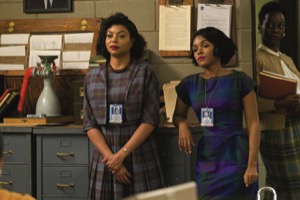
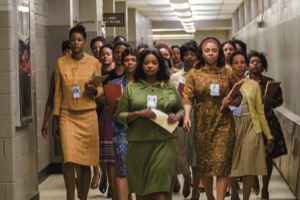
In the film, Taraji P. Henson plays Katherine G. Johnson, a childhood math prodigy who works in the “colored computer” department at NASA. She carpools with two of her coworkers, Dorothy Vaughan, played by Octavia Spencer and Mary Jackson, played by Janelle Monáe. Before everyone owned plastic computers made by IBM or Apple, a “computer” referred to people who did the math. In the early days of NASA, there was a pool of black computers and a pool of white computers. It shouldn’t be surprising that in the early 1960s, the colored computers had limited opportunities for advancement and suffered numerous indignities because of their race and gender.

Katherine is shown to be the meekest and nerdiest of the group, if also the smartest; when Dorothy is asked who of the computers that she supervised (in practice, if not by the title “supervisor”) could handle the math for launch trajectories, she immediately points to Katherine. Dorothy is older, ambitious and constantly fighting for recognition. She’s a little snarky under her breath, but Mary is snarky in full voice. Beautiful and, of course, brilliant, Mary throws out one wise quip after another, but thankfully her smart talk doesn’t get her in too much trouble. Eventually, when she uses her wit carefully, she gets her heart’s desire.

The three women struggle and face set-backs, but except for one brief moment on a blurry black-and-white TV screen, the kind of trouble we’re used to seeing in films like Selma or 12 Years a Slave is wholly absent from Hidden Figures. Numerous injustices and moments of discrimination are shown, but it is the petty humiliation of black women being forced to use separate bathrooms that ends up standing in for the totality of structural racism. This is a PG film after all, and that’s fine: This is a movie about civil rights that you can take your eight-year-old to, and that’s a fantastic thing.

Taraji P. Henson and Janelle Monáe in Hidden Figures

These kids and their parents are lucky, too. Director Theodor Melfi perfectly balances history, humor and sentimentality. Henson, Spencer and Monáe are all wonderful, seamlessly moving from light comedy to deep-and-meaningful drama. This is the bailiwick of both Spencer, who won an Oscar for The Help, and Henson, who was Oscar nominated for The Curious Case of BenjaminButton and has become a star in the high-camp soap opera Empire. Monáe is an R&B star who has only two acting credits (Hidden Figures and Moonlight), but she more than holds her own against her much more experienced co-stars, stealing every scene. Monáe, like Mary, refused to stay hidden.

Hidden Figures

Directed by Theodore Melfi

Written by Allison Schroeder and Theodore Melfi

Starring Taraji P. Henson, Octavia Spencer and Janelle Monáe

Rated PG

Originally published in LGBT Weekly.

Glimmers in the darkness

MoonlightI will repeat what everyone else has said over and over again: 2016 was dreadful, and as I write this, it continues to be wretched, with George Michael and Carrie Fisher dying as Donald Trump provokes a new Cold (or World) War. In times like these, with our waking lives enveloped by evil and despair, art can serve to distract, teach and comfort.

As I wrote in my last column, La La Land does that well; its shiny, Technicolor cheer exists in a world outside of any sadness or strife not native to its own story. It’s pretty good escapism, something that very few of the big or the good movies have offered this year. (But not great: It thinks it’s Singing in the Rain, but it’s mostly humming in the shower.)

Usually, when the world sucks, Hollywood gives more than a few great distractions. But not 2016. Zootopia, the blockbuster animated movie, is about racism and eugenics. Captain America: Civil War, the billion-dollar grossing superhero film, is about the vigilantism necessary when government fails. La La Land’s major Oscar competition, Moonlight and Manchester by the Sea, are extraordinary films about sadness and doubt. And Rogue One, the latest Star Wars film, is as dark as night in its explication of the perils of heroic redemptions. (If you have kids, don’t take them.) None of these movies were made with full knowledge that 2016 would be the greatest annus horribilis since 1939 (or possibly, 1914). But sometimes the zeitgeist can’t be stopped, and sometimes that zeitgeist tells us a few things we need to know and shows us some things we need to see.

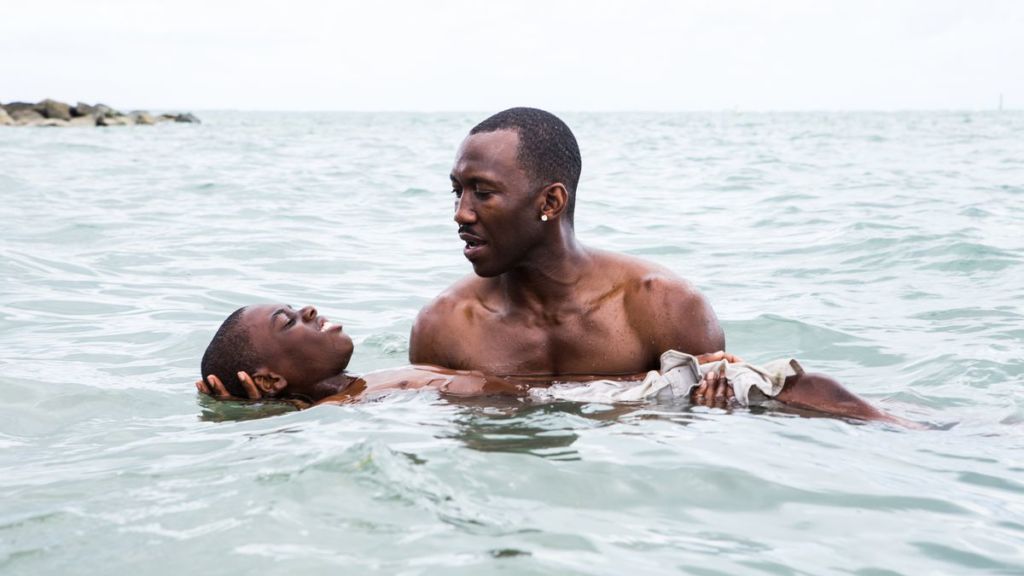
At a time of dramatically increased racism, poverty and misogyny, Moonlight is the most essential film of the year. Barry Jenkins’ triptych about the young life of a gay black man in Florida is about many things: poverty, drugs, filial piety, and, especially, the performance of masculinity. Alex Hibbert, Ashton Sanders and Trevante Rhodes play Chiron as various ages – a boy, a teenager, a young man, respectively – as he struggles to protect, express, and redeem himself. His surrogate father Juan (Mahershala Ali) is a drug dealer, his mother Paula (Naomi Harris) is a crack addict, and his only real friend is Kevin (at various ages Jaden Piner, Jharrel Jerome, and André Holland), whose confidence, both sexual and social, is magnetic. The film is weirdly and frustratingly timid in its depiction of homosexuality, but that doesn’t detract from its depiction of finding grace in a world of pain.

Casey Affleck and Lucas Hedges in Manchester by the Sea

Manchester by the Sea is as white as Moonlight is black, as neither have speaking roles for the other race, but it does similar work by teaching us how to make our way through suffering. Casey Affleck is Lee Chandler, who must figure out how to take over parenting his nephew Patrick (Lucas Hedges) after Lee’s brother Joe dies. Lee is already overwhelmed by almost unimaginable grief – it feels very 2016 in that way – and he thinks he is incapable of fulfilling Joe’s wishes and Patrick’s needs. His path is as messy as Chiron’s, fraught with the expectations of duty and manly emotions and parenthood, but Kenneth Lonnergan writes and directs Lee and Affleck to a quiet, bittersweet place of good enough. Both Moonlight and Manchester by the Sea taught me how to see glimmers in the darkness.

Several other of the year’s great films do similar work. Arrival, Denis Villeneuve’s masterful and gorgeous adaptation of a Ted Chiang short story about Earth’s first contact with alien life, is about connection and communication, about finding meaning in uncertainty and seeming chaos. Amy Adams is a linguist haunted by the death of her daughter as she tries to decipher the language of the squid-like, tree-like visitors. Natalie Portman gives a more mannered but ultimately epic performance as Jack Kennedy’s widow in the hypnotic Jackie, which details the week following the president’s assassination. In trying to define her flawed yet awe-inspiring husband’s legacy through his funeral, she rages, thrashes and grasps for meaning in meaningless tragedy.

Other People, Chris Kelly’s hilarious and devastating autobiographical first film, is about the year David (Jesse Plemmons), a gay comedy writer, spends caring for his mother (a miraculous Molly Shannon) as she dies of cancer. This sort of thing, David says, is only supposed to happen to other people: What do I do when it happens to me? In Swiss Army Man, Hank (Paul Dano) uses a slowly reanimating corpse (played by Daniel Radcliffe) to create the life he never had but always wanted, literally creating meaning out of death. The film’s power is in Hank’s ridiculous, but profound, creativity.

Several of my other favorite films don’t even bother to seek meaning or lessons beyond their horror. The nihilism of The Lobster, in which those who cannot find life partners are turned into animals of their choice (Colin Ferrel’s David chooses a lobster), is as disturbing as the cynicism of A Bigger Splash, the story of how the idle rich are consumed by petty games and jealousies while the desperate poor languish at the periphery. And Deadpool, the movie at which I probably had the most fun this year, is a comic book film that makes no attempt to be about anything but its own hyper violence and filthy jokes. In that way, it functions in many ways like La La Land, as a distraction that panders to our simplest emotions. La La Land is a hopeless romantic wish fulfillment, and Deadpool is about fulfilling the impossible to fulfill the wish that thorny problems can be solved with perfectly aimed insults, blades and bullets.

2016’s disasters can’t be killed so easily.

Originally published in LGBT Weekly.

A musical love letter to a fairytale version of Los Angeles

I relatively recently became a Los Angeleno, and among the many lessons I have learned since arriving is that the movies that taught me about L.A. are mostly bold, beautiful lies. I have long known that Hollywood is in the business of pablum, artifice and mythmaking; I’m a film critic, after all. But the extent of the fiction has only become clear to me as I’ve sat in traffic long to understand why road rage murder seems justified; I’ve witnessed the suffering of the city’s garish, inhumane poverty; I’ve met the people who write and direct and enact the lies. We believe the lies because the truth is too much to bear, and we tell the lies out of self-preservation as well as masochism. It seems fitting that as the country slouches toward fascism with a man empowered by reality television that the odds-on favorite to win Best Picture at the next Academy Awards is La La Land, a not-that-great musical love letter to a fairytale version of Los Angeles.

The film opens with a rewrite of the opening of Fellini’s 8 ½, in which Marcello Mastroianni’s anxious director is trapped in a haunting, terrifying black and white traffic jam. In La La Land, the traffic jam is in full, glorious color, and instead of writhing in agony as Mastroianni did, the drivers pop out of their cars and giddily perform “Another Day in the Sun,” a paean to up-from-your-bootstraps success in Los Angeles: “Behind these hills / I’m reaching for the heights / And chasing all the lights that shine / And when they let you down / You’ll get up off the ground / As morning rolls around / And it’s another day of sun.” It’s thrilling and funny and adorable, and, of course, a lie, since 99 percent of people who come to L.A. to be stars fail. But that’s not what La La Land is about. The movie is about wish fulfillment smothered in the gooey hooey that we sometimes call the American Dream.

At the end of the number, we zero in on two driver-dreamers, Mia (Emma Stone) and Sebastian (Ryan Gosling). After growing up on old Hollywood films like Casablanca and Bringing Up Baby, she wants to become an actress, and she’s damn good. A gifted jazz pianist, he’s obsessed with the romance of old school jazz and wants to open a club to preserve that music. They are fueled by nostalgia and pluck, and their courtship is, considering that Stone and Gosling have legendary chemistry, as endearing as any classic romance that Mia watched as a child. As they fall in love, they support each other’s ambitions, and then there are obstacles and fights, and of course song and dance.

Writer and director Damien Chazelle (of Whiplash fame) clearly followed Stephen Sondheim’s advice to hire actors who can sing, rather than singers who can act. Gosling more or less speaks his songs, and Stone dumbs down her actually good voice to match his skill level – until one song toward the end when she’s allowed to rip loose. Neither of them can dance particularly well. Their tap number is cute, but mostly because it reminds you of better dancing from the old Hollywood musicals that La La Land is repeatedly referencing. Justin Hurwitz’s songs and score are cheerful and optimistic, like the film, and they fit perfectly within Chazelle’s sun-soaked, color-saturated postcard shots of Griffith Park, Santa Monica and the Hollywood Hills.

However, with all of Chazelle’s grand aspirations and inspirations – to make something like a cross between Singing in the Rain and LA Story, I think – it’s odd how his scope narrows quickly after “Another Day in the Sun.” The cast is underpopulated, with supporting characters existing only to get Mia and Sebastian to talk when they aren’t together, and Los Angeles becomes a backdrop to a rather standard romance. Chazelle only stages two truly big numbers, the opening and the beautifully bittersweet closing, with the vast majority of the film overly intimate and seemingly muted for such a massive canvas. The film tells two lies, then: Los Angeles is a paradise of opportunity, and the movie is about Los Angeles.

La La Land
Written and Directed by Damien Chazelle
Starring Emma Stone, Ryan Gosling and John Legend
Rated PG-13
At your local multiplex

Originally published in LGBT Weekly.